React vs Angular for SaaS in 2026: A Comprehensive Guide
Explore the key differences between React and Angular for SaaS development in 2026. Learn how each framework impacts hiring, performance, and scalability to make an informed decision for your product's success.

Zakariae
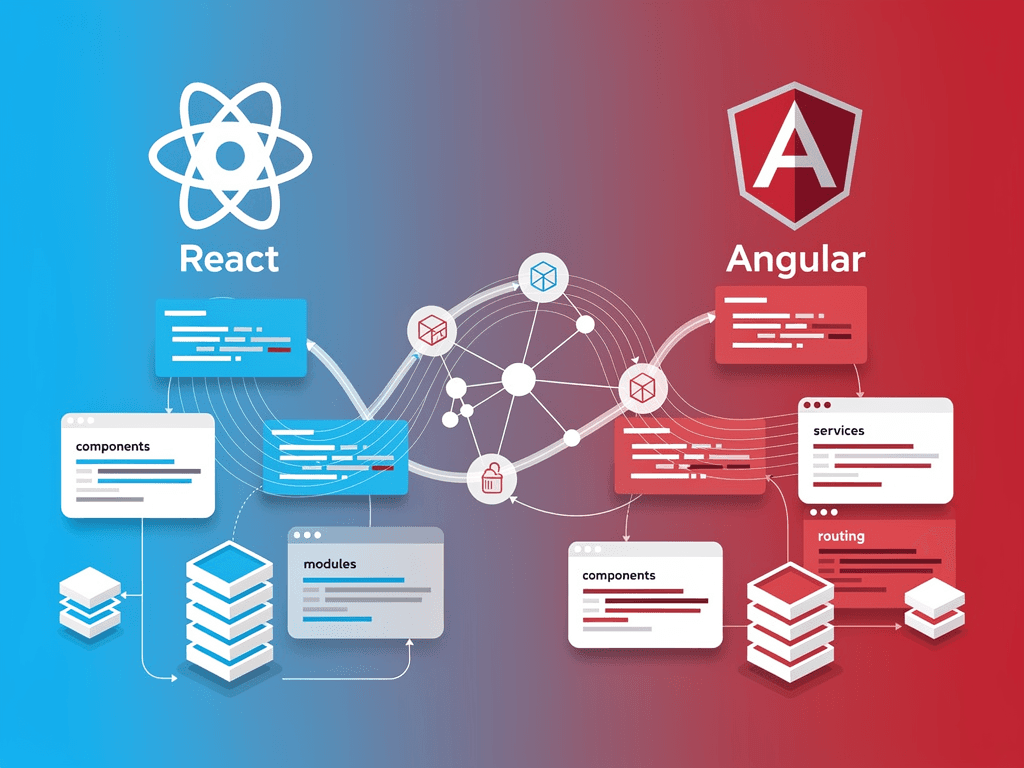
The frontend framework debate has reached a critical inflection point in 2026. With Angular 20 introducing zoneless rendering and signal-based reactivity, while React 19.2 ships a production compiler alongside revolutionary hooks, SaaS founders and development teams face a genuinely difficult architectural decision. This is not merely a technical preference; your framework choice directly impacts hiring velocity, time-to-market, long-term maintenance costs, and ultimately your product's competitive position in an increasingly crowded marketplace.
For SaaS development specifically, the stakes are even higher. You need a technology stack that supports rapid iteration, scales gracefully from MVP to enterprise, handles complex state management for subscription billing and user dashboards, and attracts top engineering talent. The react vs angular comparison in 2026 looks dramatically different than it did even two years ago, and outdated advice could steer your product in the wrong direction.
This comprehensive guide examines every dimension that matters for SaaS development: performance benchmarks, developer experience, hiring implications, ecosystem maturity, and real-world production considerations. Whether you are a technical co-founder evaluating your initial stack, an indie hacker building your first product, or a CTO planning a major refactor, this analysis will equip you with the data and frameworks needed to make a confident decision.
Key Takeaways
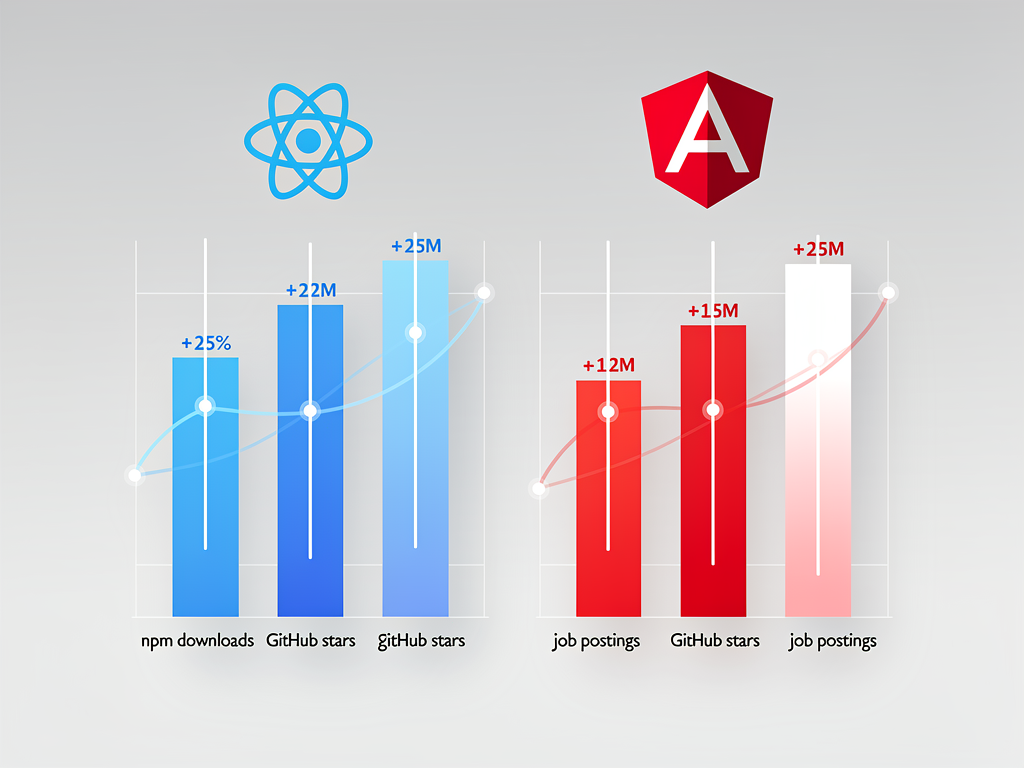
- React dominates the SaaS landscape with approximately 15 million weekly npm downloads versus Angular's 2.5 million, translating to a significantly larger talent pool and faster hiring cycles.
- Angular 20's zoneless rendering has dramatically improved performance, closing the gap with React in many benchmarks while offering superior structure for large enterprise applications.
- React's flexibility accelerates MVP development, making it the preferred choice for startups prioritizing speed-to-market and rapid iteration cycles.
- Developer onboarding differs substantially: junior developers typically become productive with React in 2 to 4 weeks versus 6 to 8 weeks for Angular.
- Total cost of ownership varies based on team size, with Angular's structured approach reducing coordination overhead for larger teams while React's simplicity benefits smaller, autonomous squads.
- The Next.js ecosystem has transformed React into a full-stack solution, offering server-side rendering, API routes, and deployment optimization out of the box.
- Enterprise adoption patterns show Angular dominating Fortune 500 internal applications while React powers the majority of consumer-facing SaaS products.
Understanding the Fundamental Architecture Differences
Before diving into specific comparisons, it is essential to understand that Angular and React represent fundamentally different approaches to frontend development. Angular is a comprehensive, opinionated framework that provides everything you need out of the box, including routing, state management, HTTP handling, form validation, and testing utilities. React, by contrast, is a focused library for building user interfaces that allows you to choose your own tools for everything else.
This architectural distinction has profound implications for SaaS development. Angular's "batteries-included" philosophy means your team spends less time evaluating and integrating third-party libraries, but you also inherit the framework's opinions about how applications should be structured. React's flexibility means you can tailor your stack precisely to your needs, but you must make and maintain those architectural decisions yourself.
For SaaS products specifically, consider what your application actually requires. Most SaaS applications need robust routing, complex form handling for onboarding flows and settings pages, state management for user sessions and subscription data, and API integration for backend services. Angular provides all of these capabilities natively, while React requires you to assemble them from the ecosystem. Neither approach is inherently superior; the right choice depends on your team's preferences, experience, and specific requirements.
The component model also differs significantly. Angular uses a class-based approach with decorators and dependency injection, which feels familiar to developers with Java or C# backgrounds. React's functional components with hooks represent a more JavaScript-native paradigm that many modern developers find more intuitive. Understanding these differences helps you anticipate how your team will adapt to either technology.
Performance Benchmarks: Angular 20 vs React 19.2
Performance has historically been one of React's strongest advantages, but Angular 20's introduction of stable zoneless change detection has substantially narrowed this gap. Independent benchmarks conducted in early 2026 reveal a more nuanced picture than the conventional wisdom suggests.
In rendering performance tests, React 19.2 with its production compiler achieves approximately 15 to 20 percent faster initial render times compared to Angular 20 in most scenarios. However, Angular's signal-based reactivity now matches or exceeds React's performance for subsequent updates in complex component trees. For SaaS dashboards with numerous interactive elements, this means both frameworks can deliver excellent user experiences.
| Benchmark Category | React 19.2 | Angular 20 | Winner |
|---|---|---|---|
| Initial Render (1000 rows) | 45ms | 52ms | React |
| Update Performance | 12ms | 11ms | Angular |
| Memory Usage | 28MB | 34MB | React |
| Bundle Size (gzipped) | 42KB | 65KB | React |
| Time to Interactive | 1.2s | 1.4s | React |
Bundle size remains an area where React maintains a clear advantage. A minimal React application with essential dependencies typically ships around 42KB gzipped, while an equivalent Angular application starts at approximately 65KB. For SaaS applications where initial load time directly impacts conversion rates, this difference can be meaningful. However, Angular 20's improved tree-shaking has reduced bundle sizes by 8 to 12 percent compared to previous versions, demonstrating Google's commitment to addressing this concern.
Server-side rendering performance also deserves attention for SaaS applications with SEO requirements or performance-sensitive landing pages. React's ecosystem, particularly through Next.js, offers more mature and battle-tested SSR solutions. Angular Universal has improved substantially, but the ecosystem around React SSR remains more extensive and better documented. For SaaS products that need excellent SEO for marketing pages while maintaining a dynamic application experience, React's SSR story is currently stronger.
Developer Experience and Learning Curve
Developer experience encompasses far more than syntax preferences. It includes tooling quality, documentation clarity, debugging capabilities, and the overall joy of working with a technology daily. Both Angular and React have invested heavily in developer experience, but they have made different tradeoffs that appeal to different types of developers.
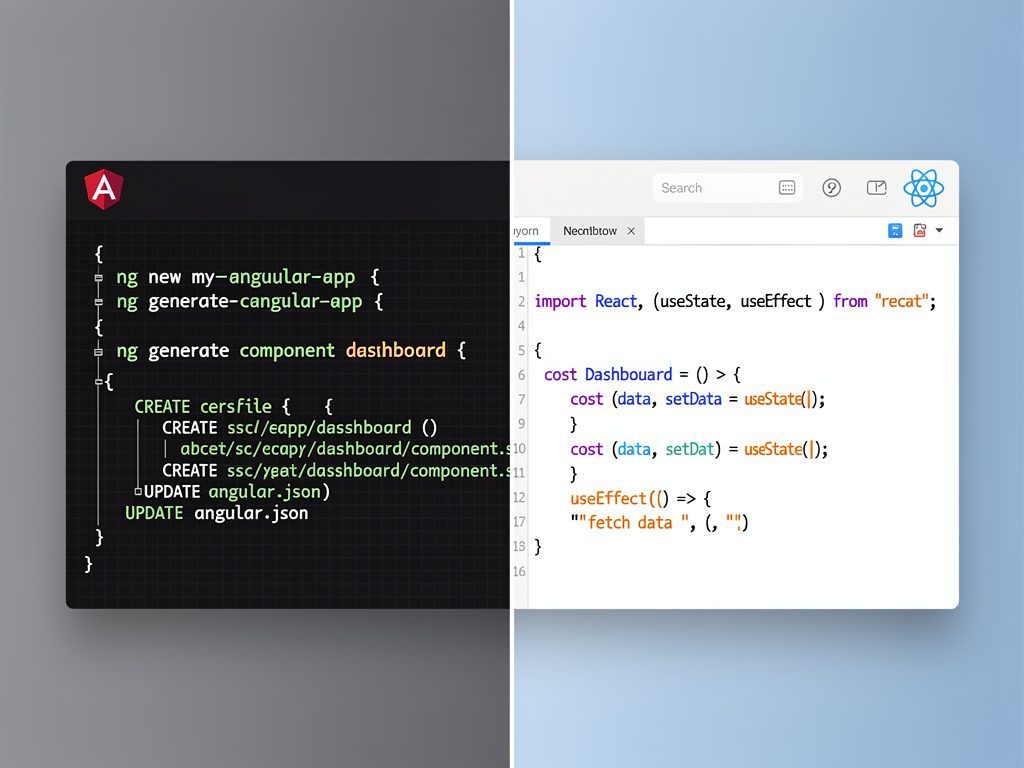
Angular's CLI provides an exceptional scaffolding and development experience. Running ng generate component creates properly structured files with correct imports, test files, and style sheets. The CLI enforces consistent project structure across your entire codebase, which becomes increasingly valuable as your team and application grow. For SaaS applications with multiple developers contributing simultaneously, this consistency reduces code review friction and makes onboarding new team members more predictable.
React's developer experience centers on flexibility and simplicity. The mental model of components as functions that receive props and return JSX is remarkably intuitive. Hooks like useState and useEffect provide elegant patterns for managing state and side effects. However, this simplicity can become a liability at scale if your team does not establish and enforce architectural conventions. Without discipline, React codebases can become inconsistent and difficult to navigate.
The learning curve differs substantially between the two technologies. React's core concepts can be grasped in a few days by developers with JavaScript experience. However, building production-ready React applications requires learning additional libraries for routing, state management, and data fetching. Angular's learning curve is steeper initially because developers must understand TypeScript, RxJS, dependency injection, and the Angular-specific component lifecycle. Once mastered, though, Angular developers have a complete toolkit without needing to evaluate external libraries.
Pro Tip: When evaluating learning curves, consider your team's existing experience. Developers with Java, C#, or enterprise backgrounds often find Angular's patterns familiar and comfortable. Developers with JavaScript-heavy backgrounds typically prefer React's functional approach.
Hiring Implications and Talent Availability
For SaaS startups, hiring velocity can determine whether you capture a market opportunity or watch competitors pull ahead. The talent landscape for Angular and React differs dramatically, and understanding these differences is crucial for workforce planning.
According to LinkedIn and Indeed data from mid-2026, active React job postings number between 70,000 and 80,000 in the United States alone, compared to approximately 30,000 for Angular. This disparity reflects both demand and supply: more companies use React, and more developers have React experience. For SaaS startups competing for talent against well-funded competitors, React's larger talent pool provides a meaningful advantage.
Salary expectations also differ between the two ecosystems. Angular developers command approximately 10 to 15 percent higher salaries on average, reflecting the smaller talent pool and the specialized knowledge required. However, this premium varies significantly by region and experience level. Senior Angular developers with enterprise experience are particularly scarce and expensive, while junior React developers are more readily available but may require more mentorship.
The global talent picture adds another dimension. React's dominance is even more pronounced in international markets, making it easier to build distributed teams or engage offshore development resources. If your SaaS company plans to scale engineering through remote hiring or outsourcing, React's global prevalence simplifies this strategy. Angular developers are more concentrated in enterprise-heavy markets and may be harder to source for fully remote positions.
AI-assisted development is increasingly relevant to hiring decisions. React's simpler patterns and extensive documentation make it more amenable to AI coding assistants like GitHub Copilot and similar tools. Developers using React report higher productivity gains from AI assistance, which can partially offset hiring challenges by making existing team members more effective. Angular's more complex patterns and less common usage mean AI tools are less accurate and helpful.
Ecosystem Maturity and Third-Party Libraries
The ecosystem surrounding a framework often matters as much as the framework itself. SaaS applications require numerous capabilities beyond basic UI rendering: authentication, payment processing, analytics, error tracking, and more. The availability and quality of integrations for these services varies between Angular and React.
React's ecosystem is substantially larger and more diverse. The npm registry hosts thousands of React-specific packages, and virtually every SaaS tool and service provides React SDKs or integration guides. Stripe, Auth0, Segment, Sentry, and other essential SaaS infrastructure providers all offer first-class React support. This ecosystem depth means you can find pre-built solutions for almost any requirement, accelerating development and reducing custom code.
Angular's ecosystem, while smaller, tends toward higher quality and better maintenance. Because Angular's community skews toward enterprise developers, packages are often more thoroughly documented, better tested, and more consistently maintained. The Angular Material component library provides a comprehensive set of production-ready UI components that follow Google's Material Design guidelines. For SaaS applications targeting enterprise customers who expect polished, professional interfaces, Angular Material offers significant value.
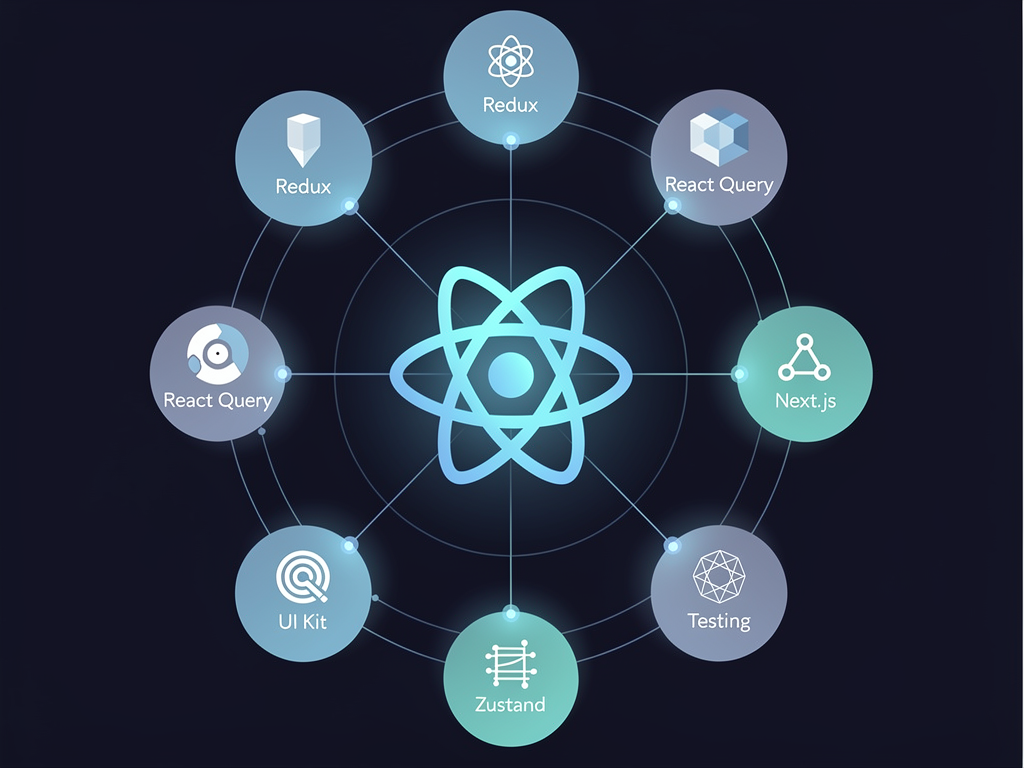
State management represents a particularly important ecosystem consideration for SaaS applications. React offers numerous options including Redux, Zustand, Jotai, and React Query, each with different tradeoffs. This flexibility allows you to choose the perfect solution for your needs, but it also requires evaluation and decision-making. Angular provides built-in state management patterns through services and RxJS, with NgRx available for applications requiring more sophisticated state handling. The Angular approach is more prescriptive but reduces decision fatigue.
For teams building SaaS products, the availability of a quality SaaS boilerplate or starter kit can dramatically accelerate initial development. The React ecosystem offers numerous options in this category, with Next.js-based solutions being particularly popular. A well-designed Next.js boilerplate can provide authentication, database integration, payment processing, and admin dashboards out of the box, allowing teams to focus on their unique value proposition rather than rebuilding common functionality.
Full-Stack Capabilities and Server-Side Rendering
Modern SaaS applications increasingly require full-stack capabilities: server-side rendering for SEO and performance, API routes for backend functionality, and seamless integration between frontend and backend code. Both Angular and React have evolved to address these requirements, but their approaches and ecosystem maturity differ significantly.
React's full-stack story centers on Next.js, which has become the de facto standard for production React applications. Next.js provides server-side rendering, static site generation, API routes, middleware, and numerous deployment optimizations out of the box. The framework's App Router, introduced in version 13 and refined through subsequent releases, offers a powerful model for building complex applications with excellent performance characteristics. For SaaS development, Next.js enables patterns like server components for data fetching, streaming for improved perceived performance, and edge functions for globally distributed API endpoints.
Angular Universal provides server-side rendering capabilities for Angular applications, but the ecosystem is less mature than Next.js. Angular's approach to SSR has improved substantially in recent versions, with better hydration strategies and reduced complexity. However, the community resources, tutorials, and production examples for Angular Universal remain less extensive than those available for Next.js. SaaS teams choosing Angular should expect to invest more effort in SSR implementation and optimization.
API development patterns also differ between the ecosystems. Next.js API routes allow you to build backend functionality directly within your frontend codebase, simplifying deployment and reducing operational complexity. This approach works well for SaaS applications with moderate backend requirements. Angular applications typically connect to separate backend services, which provides cleaner separation of concerns but increases infrastructure complexity. For early-stage SaaS products, the simplicity of Next.js API routes can accelerate development significantly.
The emergence of React Server Components represents a paradigm shift that Angular has not yet matched. Server Components allow developers to render components on the server without sending their JavaScript to the client, dramatically reducing bundle sizes and improving performance. For SaaS dashboards with complex data visualization or reporting features, Server Components enable patterns that were previously impractical. This innovation gives React a meaningful technical advantage for certain use cases.
Scalability Considerations for Growing SaaS Products
SaaS products that succeed must scale gracefully from initial launch through rapid growth phases. Scalability encompasses multiple dimensions: codebase maintainability, team growth, performance under load, and architectural flexibility. Angular and React present different scalability profiles that suit different growth trajectories.
Angular's opinionated structure provides significant advantages for scaling large codebases. The framework's module system creates clear boundaries between different parts of your application, making it easier for multiple teams to work independently without stepping on each other's code. Dependency injection facilitates testing and allows components to be developed and maintained in isolation. For SaaS products expecting to grow to dozens of developers working on the same codebase, Angular's structure reduces coordination overhead and maintains consistency.
React's flexibility can become a liability at scale if not managed carefully. Without established conventions, different parts of a React codebase can evolve in incompatible directions, making the application harder to understand and maintain. However, teams that invest in architectural discipline can achieve excellent scalability with React. Monorepo tools like Nx and Turborepo help manage large React codebases, and micro-frontend patterns allow teams to work independently while sharing a unified user experience.
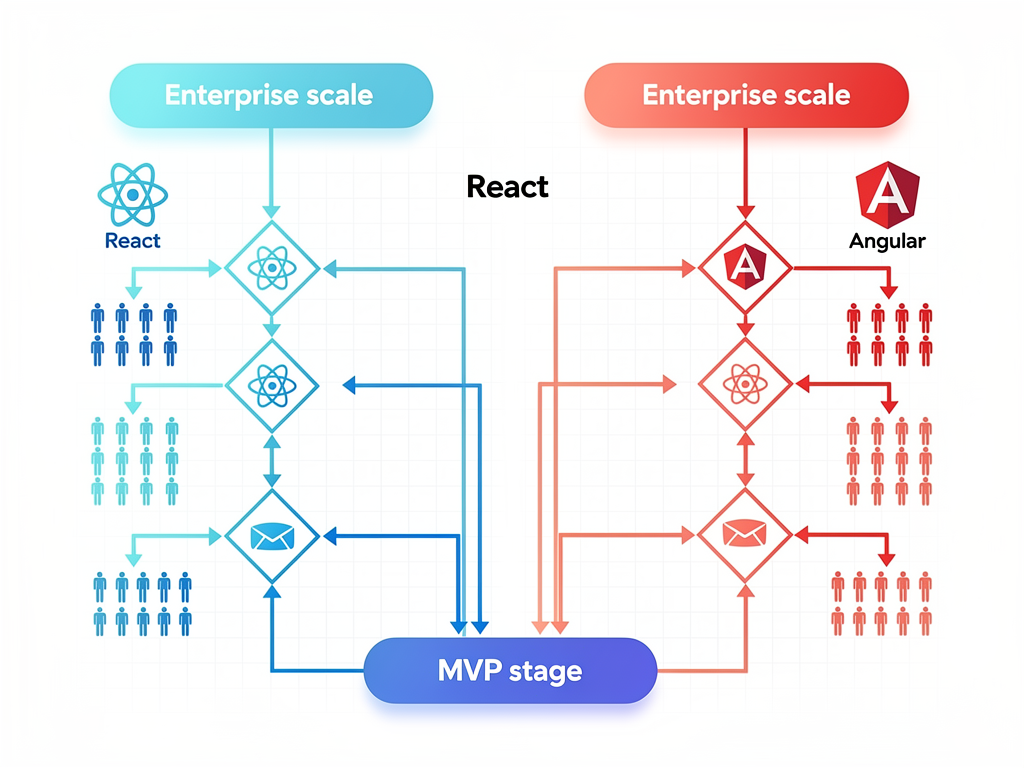
Performance scalability also differs between the frameworks. React's virtual DOM and reconciliation algorithm handle large component trees efficiently, making it well-suited for data-intensive SaaS dashboards. Angular's change detection, particularly with the new signal-based approach in version 20, performs excellently for applications with complex interdependencies between components. Both frameworks can handle the performance requirements of successful SaaS products, but optimization strategies differ.
Team scalability deserves particular attention. Angular's structured approach means new developers can become productive more quickly once they understand the framework's patterns. The consistency enforced by Angular's conventions reduces the cognitive load of navigating unfamiliar code. React teams must establish and document their own conventions, which requires additional investment but allows customization to specific team preferences and project requirements.
Enterprise Adoption and Industry Patterns
Understanding how enterprises use Angular and React provides valuable context for SaaS development decisions. Enterprise adoption patterns often predict where the broader market will move, and they reveal which framework is better suited for different types of applications.
Angular dominates internal enterprise applications, particularly in industries with strong regulatory requirements like finance, healthcare, and government. Companies including Google, Microsoft, and numerous Fortune 500 organizations use Angular for internal tools, admin dashboards, and line-of-business applications. This enterprise preference reflects Angular's strengths in maintainability, TypeScript integration, and long-term support guarantees from Google.
React powers the majority of consumer-facing SaaS products and has become the default choice for venture-backed startups. Companies including Airbnb, Netflix, Facebook, and thousands of successful SaaS businesses use React for their customer-facing applications. This pattern reflects React's strengths in developer experience, hiring availability, and ecosystem breadth. If your SaaS product targets consumers or small businesses, React aligns with industry norms.
The enterprise SaaS segment presents an interesting middle ground. Products like Salesforce, HubSpot, and similar platforms must satisfy enterprise requirements while maintaining rapid development velocity. These companies often use React for customer-facing interfaces while employing more structured approaches for complex admin functionality. This hybrid pattern suggests that framework choice can vary within a single product based on specific requirements.
Industry Insight: According to recent surveys, approximately 65 percent of new SaaS products launched in 2025 and 2026 chose React as their primary frontend technology. Angular's share has stabilized around 20 percent, with the remainder split among Vue, Svelte, and other alternatives.
Cost Analysis and Total Cost of Ownership
Framework choice impacts your SaaS company's finances through multiple channels: developer salaries, hiring costs, development velocity, maintenance burden, and infrastructure expenses. A thorough cost analysis helps quantify the financial implications of your technology decision.
Developer salaries represent the largest ongoing cost for most SaaS companies. As noted earlier, Angular developers command approximately 10 to 15 percent higher salaries than React developers with comparable experience. For a team of five developers, this premium could translate to $50,000 to $100,000 in additional annual payroll costs. However, if Angular's structure reduces the number of developers needed for a given project, the net cost could favor Angular despite higher individual salaries.
Hiring costs include recruiter fees, interview time, and productivity loss during open positions. React's larger talent pool typically results in faster hiring cycles, reducing these costs. Companies report filling React positions in an average of 4 to 6 weeks compared to 6 to 10 weeks for Angular positions. For fast-growing SaaS companies where engineering capacity directly limits growth, faster hiring provides substantial value.
| Cost Category | React Advantage | Angular Advantage |
|---|---|---|
| Developer Salaries | 10-15% lower average | Potentially fewer developers needed |
| Hiring Speed | Faster time-to-fill | Lower turnover in enterprise settings |
| Onboarding | Faster initial productivity | More consistent long-term patterns |
| Maintenance | Larger community support | Built-in tooling reduces dependencies |
| Infrastructure | Smaller bundles, lower CDN costs | Minimal difference at scale |
Development velocity impacts time-to-market and opportunity costs. React's simpler learning curve and extensive ecosystem typically enable faster initial development, particularly for MVPs and early-stage products. Angular's structure pays dividends over time through reduced refactoring needs and more predictable development timelines. For SaaS products expecting rapid iteration in early stages followed by stability, React's initial velocity advantage may outweigh Angular's long-term benefits.
Infrastructure costs differ modestly between frameworks. React's smaller bundle sizes reduce CDN and bandwidth costs, though the difference is typically negligible for most SaaS applications. Server-side rendering costs depend more on implementation details than framework choice. The primary infrastructure consideration is deployment complexity: Next.js applications deploy seamlessly to platforms like Vercel, while Angular applications may require more configuration for optimal performance.
Security Considerations for SaaS Applications
Security is paramount for SaaS applications handling customer data, payment information, and business-critical workflows. Both Angular and React provide security features, but their approaches and default behaviors differ in important ways.
Angular includes built-in protection against common web vulnerabilities. The framework automatically sanitizes user input to prevent cross-site scripting attacks, and its HTTP client includes CSRF protection by default. Angular's strict mode and ahead-of-time compilation catch potential security issues during build time rather than at runtime. For SaaS applications in regulated industries, Angular's security-first defaults reduce the risk of accidental vulnerabilities.
React requires more deliberate attention to security. While React escapes content by default to prevent XSS attacks, developers must be careful with features like dangerouslySetInnerHTML that bypass these protections. Security features like CSRF protection must be implemented through additional libraries or custom code. This flexibility allows security-conscious teams to implement precisely the protections they need, but it also creates opportunities for oversight.
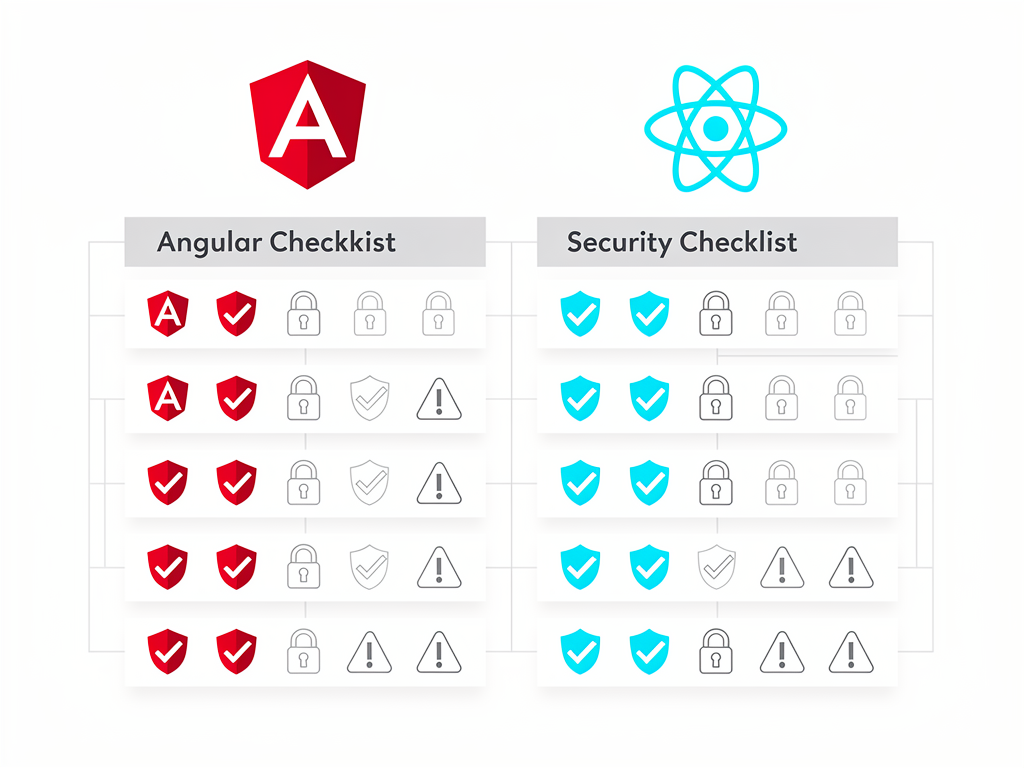
Authentication and authorization patterns differ between the ecosystems. Angular's dependency injection makes it straightforward to implement route guards and authentication services that protect sensitive areas of your application. React applications typically use higher-order components or custom hooks for authentication, with libraries like NextAuth providing comprehensive solutions for Next.js applications. Both approaches can achieve robust security, but Angular's patterns are more standardized.
Third-party dependency security deserves attention regardless of framework choice. React applications typically include more third-party dependencies, increasing the surface area for supply chain attacks. Angular's comprehensive built-in functionality reduces dependency count, potentially reducing security risk. However, both ecosystems benefit from tools like npm audit and Snyk that identify vulnerable dependencies before they reach production.
Mobile and Cross-Platform Development
Many SaaS products eventually require mobile applications, either native apps or progressive web applications. Your frontend framework choice influences your options for cross-platform development and code sharing between web and mobile.
React Native provides a mature path from React web applications to native mobile apps. While React Native is not identical to React for web, the conceptual overlap is substantial. Teams with React experience can transition to React Native development with moderate additional learning. For SaaS products planning mobile apps, React's ecosystem provides a coherent path from web to mobile with significant code sharing opportunities, particularly for business logic and state management.
Angular's mobile story is less compelling. While Ionic provides a framework for building mobile applications with Angular, the resulting apps are hybrid rather than truly native. NativeScript offers native Angular development, but adoption is limited compared to React Native. SaaS teams choosing Angular should plan for mobile development as a separate effort with less code sharing between platforms.
Progressive Web Applications represent an alternative to native mobile apps for many SaaS use cases. Both Angular and React support PWA development, with Angular providing built-in PWA support through the Angular CLI and React offering various PWA libraries and Next.js integration. For SaaS products where a responsive web application can serve mobile users adequately, PWA capabilities reduce the urgency of native mobile development.
Testing Strategies and Quality Assurance
Robust testing is essential for SaaS applications where bugs can impact customer trust and revenue. Angular and React offer different testing philosophies and tooling that influence how teams approach quality assurance.
Angular includes testing utilities as part of the framework. The Angular CLI generates test files alongside components, encouraging test-driven development. Jasmine and Karma provide the default testing stack, with excellent integration for unit testing components, services, and pipes. Angular's dependency injection makes it straightforward to mock services and isolate components for testing. For SaaS teams prioritizing test coverage, Angular's built-in testing support reduces friction.
React's testing ecosystem centers on Jest and React Testing Library, which have become industry standards. These tools encourage testing components from the user's perspective rather than testing implementation details, resulting in more maintainable tests. The React testing ecosystem is mature and well-documented, with extensive community resources for common testing scenarios. However, testing setup requires more initial configuration than Angular's out-of-box solution.
End-to-end testing works similarly for both frameworks. Cypress and Playwright have become the preferred tools for E2E testing regardless of frontend framework. These tools interact with your application through the browser, making them framework-agnostic. For SaaS applications with complex user flows like onboarding sequences or checkout processes, E2E testing provides essential confidence that critical paths work correctly.
Test maintenance burden differs based on how tests are written rather than framework choice. Angular's more stable APIs mean tests break less frequently during framework upgrades. React's faster evolution can require test updates when upgrading to new versions, though the React team has improved backward compatibility in recent releases. Both frameworks support snapshot testing for catching unintended UI changes.
Real-World Use Cases and Recommendations
Abstract comparisons only go so far. Examining specific SaaS use cases helps clarify which framework better serves different product types and business contexts.
Early-Stage Startup Building an MVP: React is typically the better choice. The faster learning curve, larger talent pool, and extensive ecosystem enable rapid development. A SaaS starter kit based on Next.js can provide authentication, database integration, and payment processing out of the box, allowing founders to focus on their unique value proposition. The flexibility to iterate quickly as you discover product-market fit outweighs Angular's structural benefits at this stage.
Enterprise SaaS Platform with Complex Workflows: Angular deserves serious consideration. If your product includes sophisticated admin dashboards, complex form workflows, or integration with enterprise systems, Angular's structure helps manage this complexity. The framework's built-in patterns for dependency injection and module organization scale well to large codebases. Enterprise customers often appreciate the polish of Angular Material components.
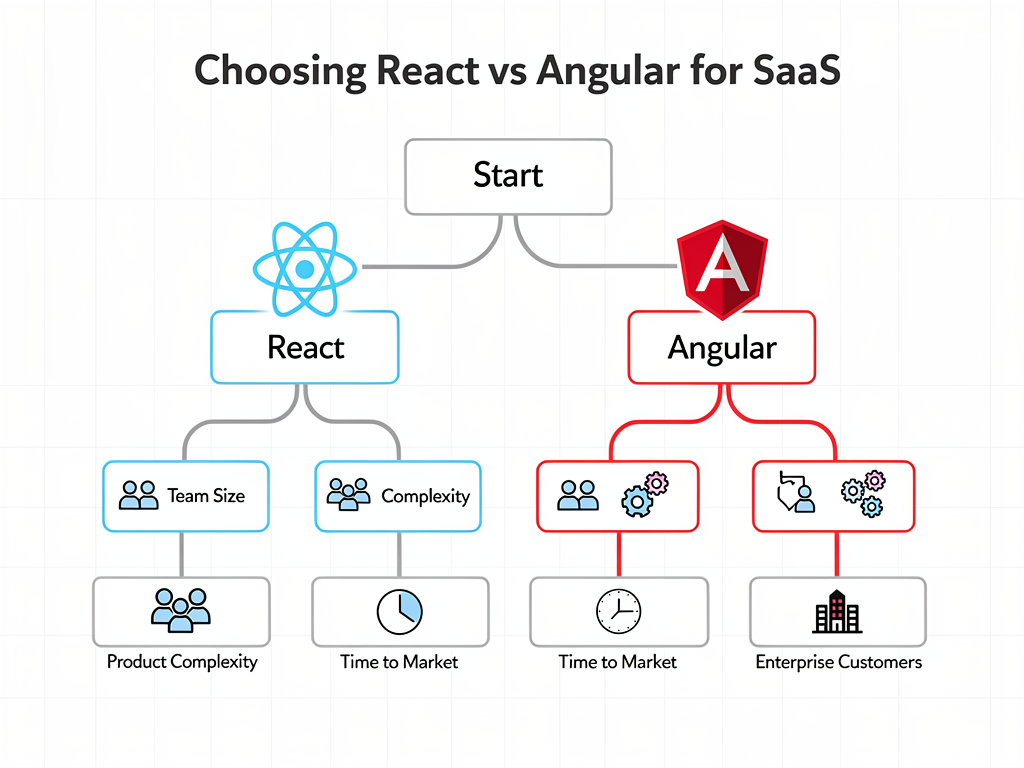
Consumer-Facing SaaS with SEO Requirements: React with Next.js provides the strongest solution. Server-side rendering, static generation, and the App Router enable excellent SEO while maintaining dynamic application capabilities. The Next.js ecosystem includes numerous SaaS-focused templates and integrations. Marketing pages can be statically generated for performance while application pages render dynamically.
Multi-Tenant SaaS Platform: Either framework can work well, but React's ecosystem offers more pre-built solutions. Platforms like NextBuilder provide complete Next.js boilerplates specifically designed for multi-tenant SaaS applications, including subdomain routing, tenant isolation, and white-label capabilities. These specialized solutions can save months of development time compared to building multi-tenancy from scratch.
Healthcare or Financial SaaS with Compliance Requirements: Angular's security defaults and enterprise pedigree provide advantages. The framework's strict mode catches potential issues during compilation, and its patterns for authentication and authorization are well-established. Angular's long-term support guarantees from Google also provide assurance for products requiring extended maintenance periods.
Migration Strategies Between Frameworks
Some teams find themselves needing to migrate between frameworks, either because initial choices proved suboptimal or because acquisitions combine codebases. Understanding migration paths helps assess the long-term flexibility of your framework choice.
Migrating from Angular to React typically involves a gradual transition using micro-frontend patterns. Tools like Module Federation allow Angular and React components to coexist within a single application, enabling incremental migration without a complete rewrite. Teams can migrate feature by feature, validating each migration before proceeding. This approach reduces risk but extends the migration timeline and increases short-term complexity.
Migrating from React to Angular follows similar patterns but is less common. The migration typically makes sense when an organization standardizes on Angular for enterprise reasons or when a React codebase has accumulated significant technical debt that a fresh start would address. Angular's CLI can scaffold new application structure, and teams can gradually move functionality from React components to Angular equivalents.
The best migration strategy is avoiding the need to migrate. Investing time in framework evaluation upfront, considering long-term requirements, and choosing deliberately reduces the likelihood of costly migrations later. For SaaS products expecting significant evolution, React's flexibility may reduce migration risk by allowing architectural changes within the framework rather than requiring framework changes.
Future Outlook and Technology Trends
Technology choices should consider not just current capabilities but anticipated evolution. Both Angular and React continue to develop, and understanding their trajectories helps assess long-term viability.
React's roadmap emphasizes server-centric patterns and improved developer experience. Server Components represent a fundamental shift toward rendering more logic on the server, reducing client-side JavaScript and improving performance. The React team's collaboration with the Next.js team suggests continued innovation in full-stack React development. For SaaS products, these trends promise better performance and simpler architectures.
Angular's evolution focuses on modernizing the framework while maintaining backward compatibility. Signals represent Angular's answer to React's hooks, providing fine-grained reactivity without the complexity of RxJS for simple cases. Zoneless rendering eliminates a long-standing performance bottleneck. Google's continued investment in Angular, evidenced by the substantial improvements in recent versions, suggests the framework will remain viable for enterprise applications.
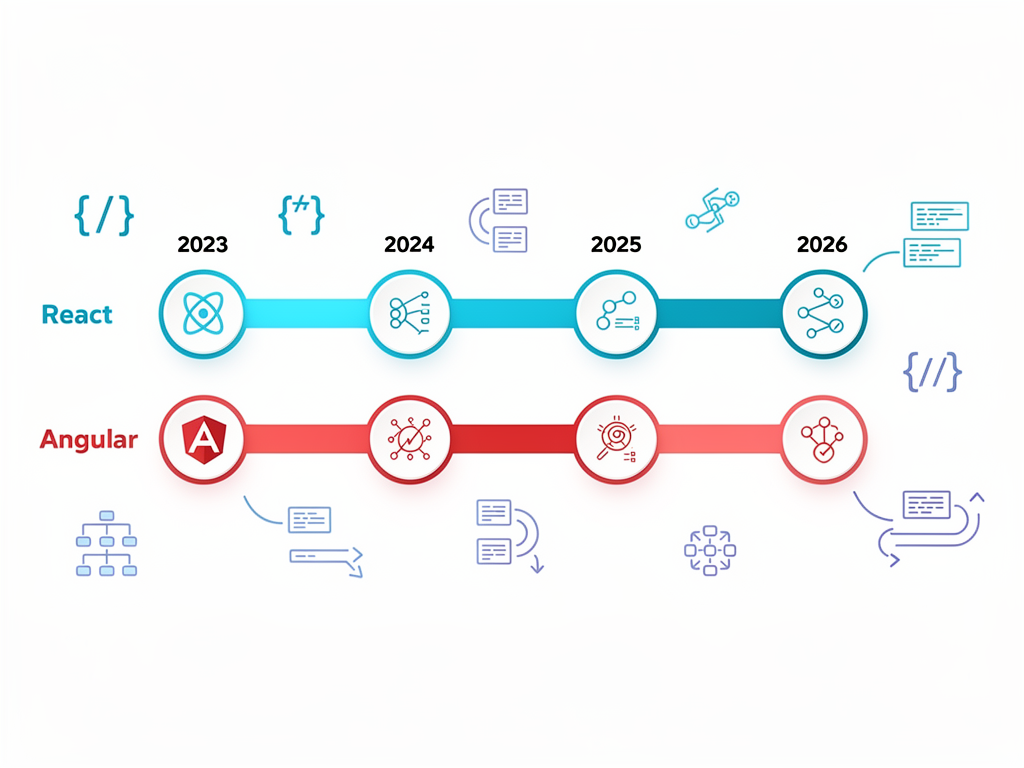
The broader frontend landscape continues to evolve with alternatives like Svelte, Solid, and Qwik gaining attention. However, React and Angular's massive ecosystems, extensive documentation, and large talent pools provide stability that newer frameworks cannot yet match. For SaaS products requiring long-term maintainability, the established frameworks remain safer choices despite the appeal of newer technologies.
AI-assisted development will increasingly influence framework preferences. React's simpler patterns and larger training corpus make it more amenable to AI code generation. As AI tools become more capable, this advantage may compound, making React developers increasingly productive relative to Angular developers. SaaS teams should consider how AI assistance factors into their productivity calculations.
Building Your SaaS with the Right Foundation
Regardless of framework choice, starting with a solid foundation accelerates SaaS development. A well-designed SaaS template provides authentication, authorization, payment processing, user management, and admin dashboards that every SaaS product needs. Building these features from scratch consumes months of development time that could be spent on your unique value proposition.
For React-based development, the Next.js SaaS template ecosystem offers numerous options ranging from minimal starters to comprehensive platforms. These templates typically include Stripe integration for subscription billing, authentication providers like NextAuth or Clerk, database setup with Prisma or similar ORMs, and admin dashboard components. Evaluating templates based on your specific requirements helps identify the best starting point.
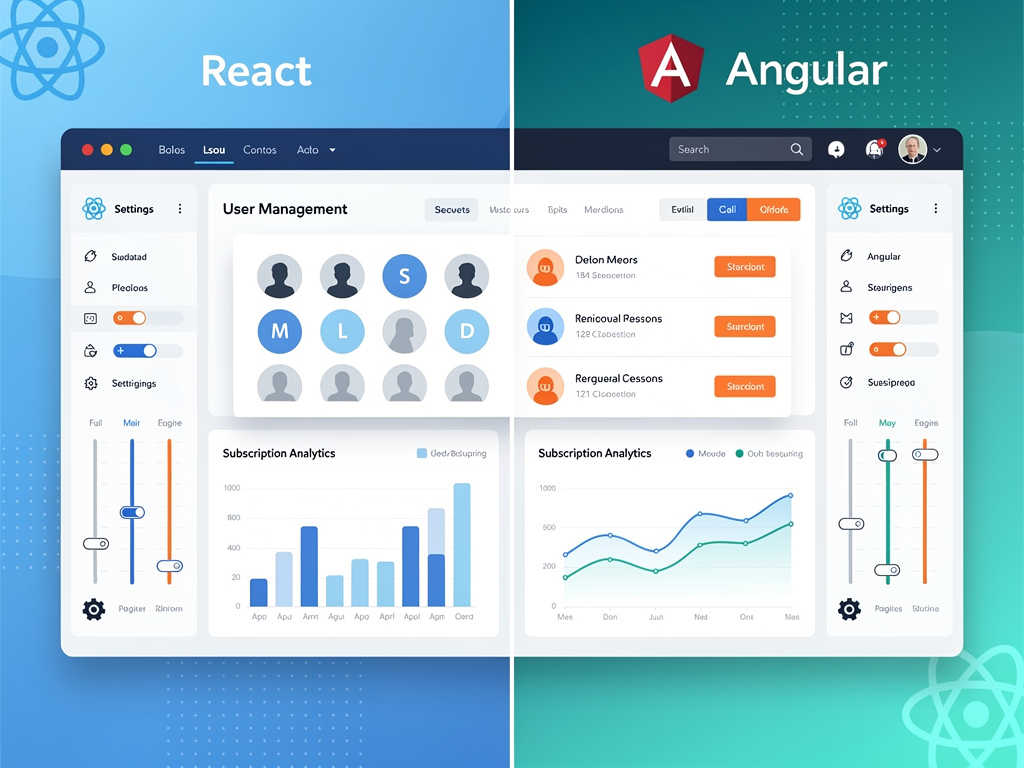
Angular's template ecosystem is smaller but includes quality options for enterprise-focused SaaS development. Templates often emphasize admin functionality, complex form handling, and enterprise integration patterns. The Angular Material component library provides a consistent design system that many templates leverage for professional appearance.
When evaluating any SaaS template, consider factors beyond initial features. Documentation quality, update frequency, community support, and the maintainer's track record all influence long-term value. A template that saves time initially but lacks updates or support may create technical debt that exceeds the initial time savings.
Conclusion
The choice between React and Angular for SaaS development in 2026 depends on your specific context rather than absolute framework superiority. React offers a larger talent pool, faster initial development, and a more extensive ecosystem that suits most SaaS startups and consumer-facing products. Angular provides superior structure, built-in tooling, and enterprise-grade patterns that benefit larger teams building complex applications.
For most SaaS founders and development teams, React represents the pragmatic choice. The combination of hiring availability, ecosystem breadth, and development velocity aligns with the needs of products seeking rapid growth. The Next.js framework transforms React into a full-stack solution capable of handling everything from marketing pages to complex application logic.
However, dismissing Angular would be a mistake for certain use cases. Enterprise SaaS products, applications with complex workflows, and teams with Angular experience can achieve excellent results with the framework. Angular 20's improvements have addressed many historical criticisms, making it a genuinely competitive option for 2026 development.
Ultimately, successful SaaS products have been built with both frameworks. Your execution, product-market fit, and team capabilities matter far more than framework choice. Choose the technology that aligns with your team's strengths, your product's requirements, and your hiring strategy, then focus your energy on building something customers love.
Frequently Asked Questions
Is Angular Dead in 2026?
Angular is definitively not dead in 2026. While React commands greater market share with approximately 15 million weekly npm downloads compared to Angular's 2.5 million, Angular maintains a strong position in enterprise development. Google continues investing heavily in the framework, with Angular 20 introducing significant improvements including zoneless rendering and signal-based reactivity. Fortune 500 companies, particularly in finance, healthcare, and government sectors, continue choosing Angular for new projects. The framework's job market remains healthy with approximately 30,000 active positions in the United States. Angular's smaller community is offset by higher-quality resources and more consistent maintenance of ecosystem packages. For SaaS products targeting enterprise customers or requiring strict architectural governance, Angular remains an excellent choice with a clear future.
Which Framework Is Better for a SaaS MVP?
React is generally the better choice for SaaS MVPs due to several practical factors. First, the faster learning curve means your team becomes productive more quickly, with junior developers typically contributing within 2 to 4 weeks compared to 6 to 8 weeks for Angular. Second, the extensive ecosystem provides pre-built solutions for common SaaS requirements including authentication, payment processing, and admin dashboards. Third, the larger talent pool simplifies hiring as you scale. Fourth, Next.js provides a complete full-stack solution with server-side rendering, API routes, and deployment optimization. Finally, numerous SaaS-focused boilerplates and templates accelerate initial development. However, if your team has strong Angular experience or your MVP targets enterprise customers expecting Angular-style architecture, Angular can work well. The key is matching framework choice to team capabilities and product requirements rather than following generic advice.
How Do Angular and React Compare for Enterprise SaaS Applications?
Enterprise SaaS applications present a more nuanced comparison. Angular's strengths align well with enterprise requirements: built-in dependency injection facilitates testing and modularity, the module system creates clear ownership boundaries for large teams, TypeScript integration is comprehensive and enforced, and long-term support guarantees provide stability assurance. React can serve enterprise needs effectively but requires more architectural discipline. Teams must establish conventions for state management, code organization, and testing patterns that Angular provides by default. The choice often depends on team composition: organizations with Java or C# backgrounds typically find Angular patterns familiar, while JavaScript-native teams prefer React. Many successful enterprise SaaS products use React with carefully designed architecture, proving that either framework can meet enterprise requirements with appropriate investment in structure and governance.
What Are the Salary Differences Between Angular and React Developers?
Angular developers command approximately 10 to 15 percent higher salaries than React developers with comparable experience levels in the United States market. This premium reflects the smaller talent pool and specialized knowledge required for Angular development. However, several factors complicate this comparison. Senior Angular developers with enterprise experience are particularly scarce, sometimes commanding premiums exceeding 20 percent. Geographic variation is significant, with the premium being larger in enterprise-heavy markets like the Northeast and smaller in startup hubs like the Bay Area. Remote hiring has somewhat equalized rates as companies access broader talent pools. For SaaS startups, the total cost calculation should include hiring speed and team size: React's larger talent pool often enables faster hiring, and the framework's simpler patterns may allow smaller teams to accomplish equivalent work. The right financial analysis considers all these factors rather than salary alone.
Can I Use Both Angular and React in the Same SaaS Product?
Yes, using both frameworks in a single SaaS product is technically possible through micro-frontend architecture, though it introduces complexity that most teams should avoid. Module Federation, available through Webpack 5, allows Angular and React components to coexist and share dependencies within a unified application shell. This approach makes sense during migrations, allowing gradual transition from one framework to another. Some large organizations use micro-frontends to allow different teams to choose their preferred technologies independently. However, for most SaaS products, the overhead of maintaining two frameworks, including separate build pipelines, duplicate dependencies, and increased cognitive load, outweighs the benefits. The pattern works best for very large applications with autonomous teams and clear boundaries between product areas. Startups and smaller teams should choose one framework and commit to it rather than introducing unnecessary complexity.
How Does Framework Choice Impact SEO for SaaS Marketing Pages?
Framework choice significantly impacts SEO capabilities, with React currently offering stronger solutions through the Next.js ecosystem. Next.js provides multiple rendering strategies: static site generation for marketing pages that search engines can crawl instantly, server-side rendering for dynamic content that still provides excellent SEO, and incremental static regeneration for content that updates periodically. These capabilities enable SaaS products to achieve excellent search rankings for marketing pages while maintaining dynamic application experiences. Angular Universal provides server-side rendering for Angular applications, but the ecosystem is less mature with fewer deployment options and community resources. For SaaS products where organic search traffic drives customer acquisition, React with Next.js provides a more straightforward path to SEO success. However, if your SaaS product relies primarily on direct sales or paid acquisition rather than organic search, the SEO difference becomes less relevant to your framework decision.
Ready to Build Your SaaS Product?
Choosing between React and Angular is just the first step. The real challenge is building a production-ready SaaS application with authentication, payments, user management, and all the features your customers expect. SaasCore provides a comprehensive Next.js boilerplate that includes everything you need to launch faster: Stripe integration for subscriptions, NextAuth for authentication, admin and client dashboards, affiliate program management, and a custom email marketing system. Stop rebuilding common functionality and focus on what makes your product unique. Try the demo today and see how SaasCore can accelerate your SaaS development journey.
Subscribe to our newsletter
Subscribe to our newsletter and stay up-to-date with the latest news and updates.